
Soccer Gym Workout Plan: A Comprehensive Guide
This comprehensive guide details a 12-week training plan, focusing on acceleration, balance, and control, ideal for pre-season preparation and maximizing player performance.
Soccer demands a unique blend of physical attributes – explosive power, agility, endurance, and robust core strength. Unlike general fitness programs, soccer-specific training prioritizes movements mirroring in-game actions. A well-structured gym workout plan complements on-field drills, addressing weaknesses and enhancing strengths crucial for success. This guide presents a phased approach, beginning with foundational strength, progressing to power development, and culminating in soccer-specific endurance.
Pre-season fitness plans, like those utilizing a ball in each practice, are vital for regaining shape. This program, adaptable to longer timelines, focuses on building a solid base. Remember, showcasing skills, personality, and work ethic during pre-season is paramount, and a targeted gym regimen is key to achieving peak physical condition.
The Importance of Off-Season & Pre-Season Conditioning
Off-season conditioning prevents deconditioning and builds a base for intense pre-season training. It’s a crucial period for addressing muscle imbalances and injury prevention through focused strength work. Pre-season, conversely, prepares players for the physical demands of competition, bridging the gap between gym gains and game performance. A 12-week plan, emphasizing acceleration, balance, and control, is ideal.
Pre-season is a showcase – skills, personality, and work ethic are all on display. A well-executed program, like those incorporating ball work, ensures players are physically and mentally ready. Inter Miami CF’s recent signings highlight the importance of peak fitness for professional success, demonstrating the need for consistent, targeted conditioning.
Phase 1: Foundational Strength (Weeks 1-4)
This initial phase prioritizes building a solid strength base, focusing on proper technique and preparing the body for more intense training ahead.
Warm-up Routine for Soccer Players
A dynamic warm-up is crucial before each session, preparing muscles and joints for the demands of soccer training. Begin with five minutes of light cardio, like jogging or jumping jacks, to elevate heart rate and increase blood flow.
Follow this with dynamic stretches, including leg swings (forward, backward, and sideways), arm circles, torso twists, and high knees. These movements improve range of motion and flexibility.
Incorporate soccer-specific movements like lateral shuffles, carioca, and quick feet drills to activate the muscles used during gameplay. Spend approximately 10-15 minutes on a thorough warm-up to minimize injury risk and optimize performance.
Lower Body Strength Training
Developing lower body strength is paramount for soccer players, enhancing power, speed, and agility. Focus on exercises that target major muscle groups like quads, hamstrings, and glutes. Prioritize compound movements for maximum effectiveness.
Include exercises such as squats, lunges, and hamstring curls in your routine. These build foundational strength and improve athletic performance. Proper form is essential to prevent injuries and maximize results.
Progressive overload – gradually increasing weight or resistance – is key to continued improvement. Aim for 3-4 sets of 8-12 repetitions for each exercise, adjusting based on individual fitness levels.
Squats: Technique and Variations
Mastering proper squat technique is crucial for building lower body strength and preventing injuries. Maintain a straight back, engaged core, and controlled descent. Ensure your knees track over your toes throughout the movement.
Variations like back squats, front squats, and goblet squats offer diverse challenges. Back squats emphasize overall strength, while front squats target quads and core stability. Goblet squats are excellent for beginners, promoting proper form.
Incorporate box squats to improve depth and control. Focus on explosive upward movement, driving through your heels. Adjust box height to suit your fitness level and range of motion.
Lunges: Building Unilateral Strength
Lunges are essential for developing unilateral (single-leg) strength, crucial for soccer’s dynamic movements. They improve balance, coordination, and stability, mimicking the demands of the sport. Proper form involves a 90-degree angle in both knees during the descent, maintaining an upright torso.
Variations include forward lunges, reverse lunges, and walking lunges. Forward lunges challenge stability, while reverse lunges are gentler on the knees. Walking lunges enhance endurance and coordination.
Add weighted lunges with dumbbells or a barbell to increase intensity. Focus on controlled movements and maintaining proper form throughout each repetition.
Hamstring Curls: Injury Prevention
Hamstring injuries are common in soccer, making targeted strengthening vital. Hamstring curls effectively isolate and strengthen these muscles, reducing injury risk and improving sprinting speed. Utilize a hamstring curl machine, focusing on controlled concentric (lifting) and eccentric (lowering) phases.
Proper form involves a full range of motion, avoiding excessive momentum. Variations include seated, lying, and standing hamstring curls, each targeting slightly different muscle fibers.
Incorporate 3-4 sets of 10-15 repetitions, gradually increasing resistance as strength improves. Prioritize quality over quantity, maintaining proper technique throughout the exercise.
Upper Body Strength Training
While soccer is primarily lower-body dominant, a strong upper body is crucial for balance, shielding the ball, and powerful shooting. This phase focuses on developing both strength and stability in the upper body.
Exercises include bench press for power and explosiveness, pull-ups (or lat pulldowns) to build back strength for core stability, and shoulder press to enhance stability and range of motion.
Perform 3-4 sets of 8-12 repetitions for each exercise, prioritizing controlled movements and proper form.
Bench Press: Power and Explosiveness
The bench press is a foundational exercise for developing upper body power, directly translating to stronger shielding and more forceful shots on goal. Focus on explosive concentric movements – pushing the weight up quickly – while maintaining control during the eccentric phase (lowering the weight).
Start with a weight that allows for 8-12 repetitions with good form. Proper technique involves a slight arch in the back, feet flat on the floor, and controlled breathing.
Progress by gradually increasing the weight or reducing rest times between sets.
Pull-ups/Lat Pulldowns: Back Strength
Developing robust back strength is crucial for soccer players, enhancing posture, core stability, and the ability to withstand physical challenges during matches. Pull-ups, if achievable, are the preferred method, building functional strength.
If pull-ups are too difficult, lat pulldowns provide an excellent alternative, allowing for adjustable resistance. Focus on controlled movements, squeezing the shoulder blades together during the pull.
Aim for 3-4 sets of 8-12 repetitions, prioritizing proper form over the amount of weight lifted.
Shoulder Press: Stability and Range of Motion
Strong and stable shoulders are vital for soccer, enabling powerful passing, shooting, and protecting the ball. The shoulder press, performed with dumbbells or a barbell, builds strength and endurance in the deltoids and surrounding muscles.
Prioritize controlled movements throughout the exercise, maintaining a slight bend in the elbows to protect the joints. Focus on a full range of motion, lowering the weight to shoulder height and pressing upwards.
Complete 3-4 sets of 8-12 repetitions, ensuring proper technique to avoid injury.
Core Strength & Stability
A robust core is foundational for soccer players, enhancing power transfer, balance, and injury prevention. Core exercises stabilize the spine and pelvis, improving performance during dynamic movements like cutting, shooting, and tackling.
This phase incorporates both isometric and rotational core work. Isometric exercises, like planks, build static strength, while rotational movements, such as Russian twists, develop explosive power for changing direction.
Prioritize proper form over speed, engaging the deep abdominal muscles throughout each exercise. Consistent core training is paramount for overall athletic development.
Plank Variations: Building Isometric Strength

Plank variations are crucial for developing isometric core strength, vital for maintaining stability during soccer-specific movements. Start with a standard plank, focusing on a straight line from head to heels, engaging the core and glutes.
Progress to side planks to target obliques, enhancing rotational stability. Add dynamic elements like plank jacks or mountain climbers to increase intensity and challenge cardiovascular fitness.
Ensure proper form throughout each variation, avoiding hip sagging or arching of the back. Hold each plank for 30-60 seconds, completing 3-4 sets.
Russian Twists: Rotational Power
Russian twists are essential for building rotational power, a key component of soccer performance for actions like shooting and changing direction. Begin seated with knees bent and feet slightly elevated, maintaining a slight lean back.
Hold a weight (dumbbell, medicine ball) or simply clasp your hands together. Twist your torso from side to side, touching the weight or hands to the ground beside you.
Focus on controlled movements, engaging the obliques and core throughout. Perform 3-4 sets of 15-20 repetitions, prioritizing quality over speed.
Phase 2: Power & Explosiveness (Weeks 5-8)
This phase integrates plyometrics, speed drills, and intensified strength training to develop explosive movements crucial for soccer’s dynamic demands.
Plyometric Exercises for Soccer
Plyometrics are vital for soccer players, enhancing explosive power needed for sprinting, jumping, and quick changes of direction. Box jumps are foundational, developing leg power and coordination; start with a manageable height and progressively increase it. Depth jumps, an advanced exercise, utilize a drop followed by an immediate jump, maximizing reactive strength.
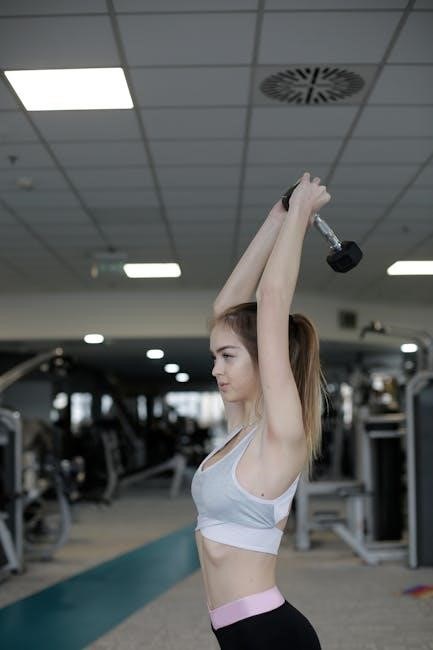
Bounding, simulating a running stride with exaggerated leaps, improves stride length and power output. Proper technique is paramount to prevent injuries; focus on landing softly and maintaining core engagement. These exercises should be incorporated strategically, allowing for adequate recovery between sets and sessions. Remember to prioritize quality over quantity, ensuring each repetition is performed with maximal effort and control.
Box Jumps: Developing Explosive Leg Power
Box jumps are a cornerstone plyometric exercise, crucial for soccer players aiming to boost explosive leg power. Begin with a box height appropriate for your fitness level, prioritizing proper form over height. The movement involves a powerful jump onto the box, landing softly with bent knees, and stepping or jumping back down.
Focus on driving through the heels and extending the hips fully during the jump. Progressively increase the box height as strength and technique improve. Incorporate box jumps into your training 2-3 times per week, with adequate rest between sets. This exercise directly translates to improved sprinting speed and jumping ability on the field.
Depth Jumps: Advanced Plyometrics
Depth jumps represent an advanced plyometric exercise, demanding a solid foundation of strength and technique before implementation. This drill involves stepping off a box and immediately jumping upwards upon landing, minimizing ground contact time. The rapid stretch-shortening cycle enhances explosive power and reactivity.
Start with a moderate box height and prioritize a quick, reactive jump. Focus on maintaining proper landing mechanics – soft knees, controlled descent. Depth jumps are highly taxing on the neuromuscular system; therefore, limit volume and ensure adequate recovery. This exercise is best suited for experienced athletes seeking to maximize power output for sprints and jumps.
Bounding: Improving Stride Length
Bounding is a dynamic plyometric exercise specifically designed to enhance stride length and power, crucial for soccer players needing to cover ground quickly. This involves exaggerated running strides, focusing on maximizing horizontal displacement with each step. Maintain a powerful arm drive and emphasize pushing off the ground forcefully.
Focus on landing softly and immediately transitioning into the next bound. Vary the terrain – flat ground, slight inclines – to challenge different muscle groups. Bounding improves both leg strength and coordination, translating to increased speed and agility on the field. Proper technique is vital to prevent injury; prioritize form over distance initially.
Speed and Agility Drills
This phase integrates drills to translate strength and power into soccer-specific movements. Cone drills are paramount, enhancing change of direction speed and footwork – essential for navigating tight spaces on the pitch. Shuttle runs build speed endurance, simulating the repeated sprints demanded during a match.
These drills aren’t just about raw speed; they focus on reactive agility, improving a player’s ability to respond quickly to changing game situations. Incorporate variations in cone placement and shuttle distances to continually challenge the athlete. Proper warm-up and cool-down are crucial to prevent injuries during these high-intensity exercises.
Cone Drills: Enhancing Change of Direction
Cone drills are foundational for soccer agility, demanding rapid changes in direction and quick footwork. Set up various patterns – linear, L-shaped, and weaving – to challenge different movement planes. Players should focus on maintaining a low center of gravity and explosive steps when navigating the cones.
Emphasize proper technique: short, choppy steps during cuts, and a strong core engagement for stability. Progress from slow, controlled movements to full-speed repetitions. Incorporate a ball to simulate game-like conditions, demanding coordination and ball control alongside agility. These drills directly translate to improved dribbling and defensive maneuvering.
Shuttle Runs: Improving Speed Endurance
Shuttle runs are crucial for developing the speed endurance vital in soccer, mimicking the repeated sprints and changes of pace during a match. Establish distances relevant to soccer – 20, 30, and 40-yard shuttles are effective. Players sprint to a designated point, touch the line, and sprint back to the starting point, repeating for a set number of repetitions or time.
Focus on maintaining high intensity throughout the exercise, minimizing recovery time between repetitions. Variations include adding a ball dribbling component or incorporating a defensive shuffle. These drills build lactic acid tolerance and enhance the ability to recover quickly between high-intensity bursts, essential for sustained performance.
Strength Training with Increased Intensity
Phase 2 demands a boost in strength training intensity, transitioning from foundational strength to power development. Incorporate exercises like Power Cleans and Snatch exercises, focusing on explosive movements with controlled technique. These full-body exercises develop power and coordination, crucial for sprints, jumps, and tackles.
Maintain a focus on proper form to prevent injuries, potentially working with a qualified coach. Increase weight gradually while decreasing repetitions. Supplement these with continued lower and upper body work, but prioritize explosive variations. Remember, the goal is not just strength, but the ability to apply that strength rapidly and efficiently on the soccer field.
Power Cleans: Full Body Explosiveness
Power Cleans are a dynamic, full-body exercise vital for soccer players seeking explosive power. This Olympic lift develops strength, speed, and coordination simultaneously, mimicking the demands of sprinting and jumping. The movement involves lifting a barbell from the floor to the shoulders in one explosive motion, requiring significant power output.
Proper technique is paramount; start with lighter weights and focus on form. Engage the core, maintain a straight back, and drive through the heels. Power Cleans translate directly to improved acceleration, agility, and the ability to generate force quickly on the field, enhancing overall athletic performance.
Snatch Exercises: Developing Power and Coordination
Snatch exercises, another Olympic lift, are incredibly beneficial for soccer athletes, demanding a high degree of power, coordination, and flexibility. Unlike Power Cleans, the Snatch involves lifting the barbell overhead in a single, fluid motion. This complex movement recruits nearly every muscle group, fostering full-body strength and explosive power.
Mastering the Snatch requires diligent practice and proper coaching to ensure correct technique and prevent injury. It significantly improves athletic capabilities, translating to enhanced jumping ability, faster sprinting speeds, and improved agility – all crucial for success in soccer.

Phase 3: Soccer-Specific Endurance (Weeks 9-12)
This phase integrates interval training, small-sided games, and reduced-volume lifting to build soccer-specific stamina and maintain strength gains.
Interval Training on the Track
Interval training is crucial for developing the aerobic and anaerobic endurance necessary for sustained high-intensity performance on the soccer field. This phase focuses on structured track workouts designed to improve VO2 max and speed endurance.
400m repeats, performed at a challenging pace with controlled recovery periods, are excellent for boosting VO2 max – the maximum amount of oxygen your body can utilize during exercise. Conversely, 200m repeats enhance speed endurance, allowing players to maintain high speeds for longer durations during matches.
Proper warm-up and cool-down routines are essential to prevent injuries and promote recovery. Adjust the number of repetitions and recovery times based on individual fitness levels and the demands of the upcoming season.
400m Repeats: Improving VO2 Max
400-meter repeats are a cornerstone of soccer-specific endurance training, directly targeting VO2 max – the maximum oxygen uptake during intense exercise. These intervals should be performed at a pace slightly faster than your typical game speed, pushing your cardiovascular system to its limits.

A typical workout might involve 6-8 repetitions of 400m, with a recovery jog or walk of equal duration between each repeat. Focus on maintaining consistent pacing throughout each interval and gradually increasing the number of repetitions as fitness improves.
Proper form and breathing techniques are vital to maximize efficiency and prevent fatigue. Remember to warm up thoroughly before starting and cool down effectively afterward.
200m Repeats: Enhancing Speed Endurance
200-meter repeats are crucial for developing speed endurance, the ability to maintain high-intensity running over prolonged periods – essential for soccer’s dynamic demands. These shorter, faster intervals build resistance to fatigue during repeated sprints and changes of direction.
A structured workout could consist of 8-12 repetitions of 200m, performed at near-maximum speed, followed by a recovery period of approximately equal time. Prioritize explosive starts and maintain proper running mechanics throughout each repetition.
Monitor your heart rate and perceived exertion to ensure you’re working at the appropriate intensity. Adjust the number of repetitions and recovery time based on your fitness level.
Small-Sided Games & Conditioning
Integrating small-sided games (SSGs) like 3v3 or 5v5 is vital for translating gym-gained fitness into soccer-specific movements and tactical awareness. These games replicate match scenarios, demanding both physical exertion and quick decision-making under pressure.
SSGs improve cardiovascular endurance, agility, and passing accuracy while fostering teamwork and communication. Vary the game rules – such as limiting touches or requiring specific passing patterns – to target different skills.
Adjust field size and player numbers to control intensity and ensure players are consistently challenged. SSGs provide a fun and engaging way to maintain fitness while honing soccer skills.
3v3/5v5 Games: Tactical and Physical Development
These small-sided games are crucial for bridging the gap between gym work and on-field performance, fostering both tactical understanding and physical conditioning. 3v3 and 5v5 formats demand constant movement, quick passing, and intelligent positioning, mirroring the demands of a full match.
Players experience increased touches on the ball, enhancing their control and decision-making speed. These games also improve cardiovascular fitness, agility, and the ability to perform repeated sprints.
Focus on encouraging communication, creative play, and defensive organization within these confined spaces, building a well-rounded soccer athlete.
Maintaining Strength Throughout Endurance Phase
As the training shifts towards soccer-specific endurance, it’s vital to prevent strength loss. Reduce the volume of lifting sessions, but maintain high intensity to preserve the gains made during the foundational and power phases.
Focus on compound movements like squats and deadlifts with fewer repetitions and heavier weights. This approach stimulates the nervous system without excessively taxing the muscles already stressed by increased running and game play.
Prioritize quality over quantity, ensuring proper form and technique to minimize injury risk and maximize strength retention throughout this demanding phase.
Reduced Volume, High Intensity Lifting
During the endurance phase, shift your lifting strategy to prioritize maintaining strength without hindering your conditioning. This means significantly reducing the total number of sets and repetitions performed each week.
However, crucially, maintain or even slightly increase the weight lifted during each set. This high-intensity approach stimulates muscle fibers and prevents strength degradation caused by the demands of increased running and soccer-specific drills.
Focus on 2-3 lifting sessions per week, concentrating on compound exercises to maximize efficiency and preserve hard-earned strength gains.
Cool-down and Recovery
Effective cool-down routines are paramount for injury prevention and optimizing recovery after intense training sessions. Begin with 10-15 minutes of static stretching, holding each stretch for 30 seconds to improve flexibility and reduce muscle soreness.
Incorporate foam rolling to target major muscle groups, releasing tension and promoting blood flow. This self-myofascial release technique aids in muscle recovery and reduces the risk of developing adhesions.
Prioritize adequate hydration and nutrition to replenish glycogen stores and support muscle repair.
Static Stretching: Improving Flexibility
Following intense workouts, dedicate 10-15 minutes to static stretching, holding each stretch for a sustained 30 seconds. This method significantly enhances flexibility, crucial for soccer players requiring a wide range of motion.
Focus on major muscle groups utilized during play – hamstrings, quadriceps, groin, calves, and hip flexors. Proper stretching reduces muscle stiffness and soreness, minimizing injury risk.
Remember to breathe deeply throughout each stretch, promoting relaxation and maximizing the stretch’s effectiveness. Consistent static stretching contributes to long-term flexibility gains.
Foam Rolling: Muscle Recovery
Incorporate foam rolling into your cool-down routine for enhanced muscle recovery and reduced soreness. Spend 5-10 minutes targeting key muscle groups – quadriceps, hamstrings, calves, glutes, and back.
Foam rolling applies self-myofascial release, alleviating muscle knots and improving blood flow. This process aids in faster recovery and prepares muscles for subsequent training sessions.
Slow, controlled movements are key; roll over each muscle group for 60-90 seconds, pausing on tender spots. Consistent foam rolling contributes to improved muscle health and injury prevention.